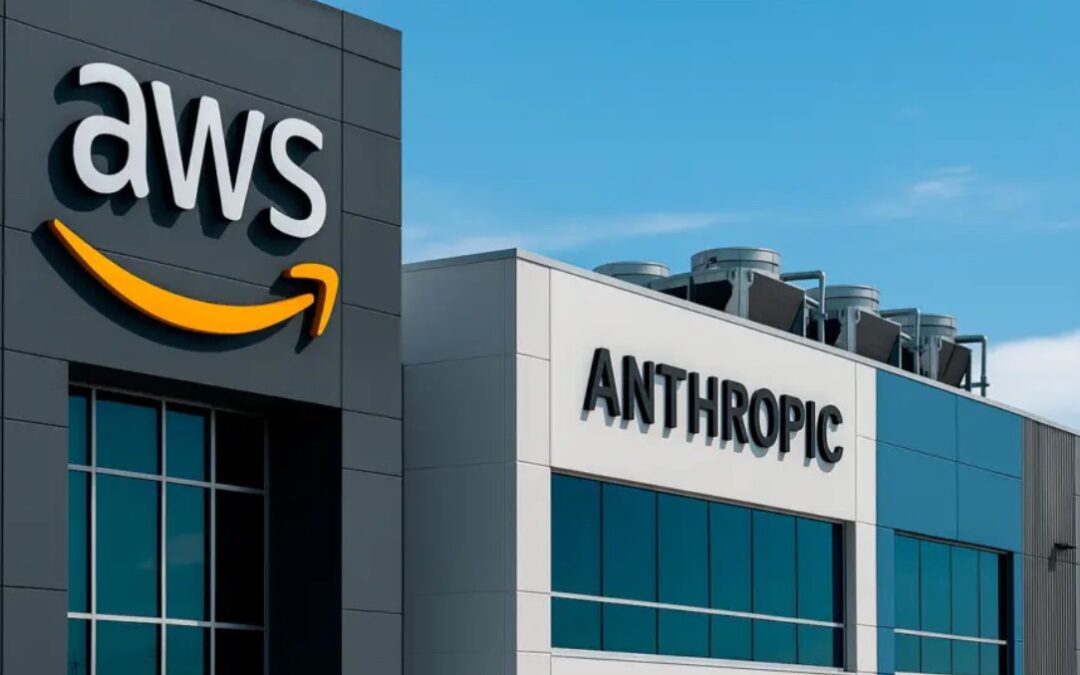
In a bold demonstration of ambition and confidence, Anthropic has announced a $50 billion investment to construct a network of AI-optimized data centers across the United States — with flagship campuses in Texas and New York. This move not only cements Anthropic’s long-term infrastructure independence but also represents a pivotal shift in how enterprises may consume and control artificial intelligence at scale.
Why Anthropic Is Making This Move
Founded in 2021 by former OpenAI researchers, Anthropic has positioned itself as the “safety-first” AI company. Its Claude family of large language models is known for interpretability, reliability, and enterprise readiness. The $50 billion investment underscores three key motivations:
Capacity and Control. By building its own infrastructure, Anthropic reduces dependence on hyperscalers like Amazon Web Services, Google Cloud, and Microsoft Azure. This grants it direct control over compute costs, latency, and data sovereignty — critical factors for enterprise clients in finance, law, and healthcare. Enterprise Differentiation. Anthropic is betting that enterprise clients will value not just powerful models but predictable, secure, and transparent performance. Its upcoming data centers are designed specifically for AI-native workloads, meaning organisations can expect lower inference latency, stronger privacy guarantees, and scalable fine-tuning environments. National Competitiveness. The U.S. government has encouraged private-sector leadership in AI infrastructure to reduce reliance on overseas chip and cloud ecosystems. Anthropic’s investment directly aligns with that national strategic goal — a move likely to attract policy goodwill and potential partnerships.
Comparative Advantage Over Competitors
While competitors such as OpenAI, Google DeepMind, and Meta have focused primarily on model innovation and partnership-driven infrastructure (typically via Microsoft or in-house hyperscale clouds), Anthropic’s strategy is more vertically integrated.
OpenAI remains closely tied to Microsoft’s Azure cloud stack, giving it reach but also dependency. Google DeepMind benefits from Google’s data-center dominance but prioritizes research rather than enterprise adaptation. Meta’s AI ambitions remain consumer-focused, with limited enterprise penetration.
Anthropic’s approach — owning its physical and computational backbone — offers a more bespoke value proposition for large organisations seeking dedicated AI capacity without the data-sharing or compliance ambiguities that can come with shared cloud platforms.
However, the strategy is not without risk. Owning and operating such vast infrastructure could expose Anthropic to fluctuating energy prices, logistical delays, and regulatory oversight on environmental impact. Yet, if executed effectively, this investment could deliver unmatched control, speed, and transparency — attributes enterprises increasingly demand in the AI era.
What Enterprises Stand to Gain
For enterprise clients, Anthropic’s infrastructure expansion promises:
Customizable compute environments for AI model integration, training, and deployment. Enhanced data governance, allowing sensitive data to be processed within U.S.-based, Anthropic-controlled facilities. Reduced model latency, a critical differentiator in sectors like finance, logistics, and customer engagement. Scalable pricing and guaranteed uptime, key for clients seeking stability amid cloud volatility.
These capabilities are expected to underpin the next generation of Claude models, extending beyond conversational AI into decision support, knowledge synthesis, and autonomous workflow automation.
Balanced Outlook
Anthropic’s $50 billion bet represents both a leap forward and a calculated gamble. If successful, it could redefine enterprise AI delivery by marrying raw compute power with robust ethical design. But it also raises expectations — both in sustainability performance and financial returns.
In an era where the AI race increasingly hinges on who controls the infrastructure, Anthropic is betting not on volume, but on precision, transparency, and trust. It’s a bold move that could either set a new industry standard — or redefine the limits of ambition in artificial intelligence.
