The advent of artificial intelligence (AI) in drug discovery has evolved from an experimental curiosity to a strategic imperative for the pharmaceutical and medical technology sectors. What was once niche investment and proof-of-concept work in the early 2020s is now a defining axis of competition and innovation as we head into 2026. CEOs and corporate leaders must understand not just the technological promise of AI, but the commercial, regulatory, and strategic realities shaping the industry this year.
AI Has Moved Beyond Proofs of Concept
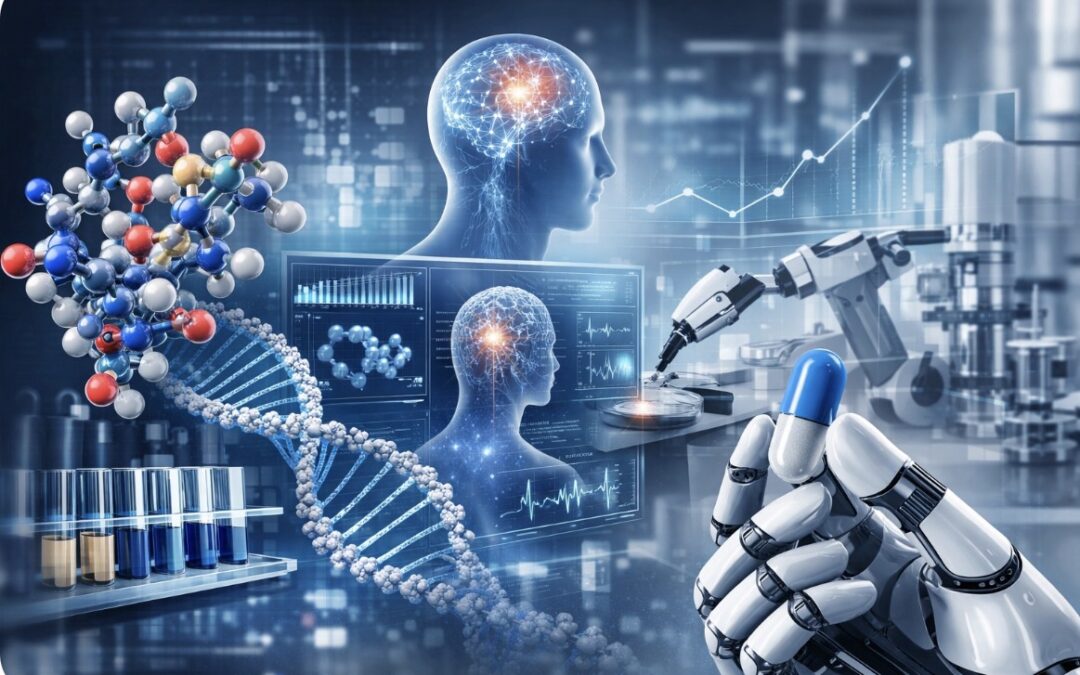
In 2026, AI is embedded across the drug discovery pipeline rather than confined to isolated research projects. Generative AI models are no longer futuristic concepts—they are actively designing candidate molecules, predicting their biological behavior, and narrowing down targets with unprecedented speed. These tools can analyze complex biological datasets to predict molecular interactions, toxicity profiles, and therapeutic potential far faster than traditional methods, dramatically cutting early-stage timelines and costs.
Expanding adoption is evidenced by market data: the AI in drug discovery segment is projected to grow robustly throughout the decade, with forecasts seeing multi-billion-dollar expansion as companies integrate machine learning, deep learning, and predictive analytics into R&D workflows.
Strategic Partnerships and Ecosystem Builds
Major pharmaceutical players are no longer experimenting alone. Strategic investments and partnerships are scaling AI capabilities across oncology, immunology, metabolic diseases, and more. For example, AstraZeneca’s acquisition of an AI foundation model specialist underscores the strategic importance of in-house AI capability to drive biomarker discovery and clinical insights.
Similarly, collaborations such as the $1 billion research lab between Nvidia and Eli Lilly highlight how tech-pharma convergence is shaping infrastructure for future drug discovery—not just algorithms but purpose-built computing systems and shared platforms. These ecosystems allow pharma companies to combine biological expertise with cutting-edge AI computing power.
Regulatory Landscape Is Catching Up
Once a laggard, regulatory oversight is beginning to align with innovation. In early 2026, the FDA and European Medicines Agency jointly issued principles for “good AI practice” in drug development, signaling global coordination on safety, efficacy, and ethical application of AI tools across the drug lifecycle. CEOs must factor regulatory expectations into AI strategy—not just for compliance but as a competitive differentiator that builds trust with payers and patients.
Clinical Trials and Precision Medicine
AI’s role in clinical research is now substantial. Predictive models help identify optimal patient cohorts, simulations reduce costly trial failures, and real-time analytics improve patient safety monitoring. AI accelerates decentralized clinical trials and enables adaptive protocols that continually optimize endpoints based on emerging data.
Personalized medicine—a long-standing promise—is increasingly realized as AI correlates genomic and phenotypic data to tailor therapies. This is not just a therapeutic advantage but a market differentiator in a world where payers demand value and outcomes evidence day one.
MedTech and Beyond
AI’s impact extends into medical technologies where diagnostic algorithms, digital twins, and autonomous laboratory systems are improving device precision, optimizing manufacturing, and enhancing supply-chain resilience. Investment momentum in AI-powered medical devices and predictive health systems is intensifying, reflecting a broader shift toward data-driven healthcare.
The Bottom Line
2026 is the year AI transcends buzzword status to become a core driver of competitive advantage in pharma and medtech. Leaders must invest not only in technology but in talent, data infrastructure, governance, and cross-industry partnerships. Those who integrate AI deeply and responsibly will unlock faster development cycles, smarter clinical programs, and personalized therapies that redefine patient value—while reshaping the economics of healthcare innovation.
