In a New York apartment, someone lies on the floor, claiming to complete “100 crunches in 10 seconds” using electric stimulation. It sounds surreal, almost cinematic. Yet this is not science fiction—it is part of a growing global movement known as biohacking. To some, it represents the future of human potential. To others, it is a dangerous experiment wrapped in technological hype.
Biohacking is a broad term describing efforts to enhance the human body and mind using technology, biology, nutrition, and experimentation. At its simplest level, it can mean harmless practices like intermittent fasting, sleep optimisation, wearable fitness trackers, or personalised diets. At its extreme, it includes implanted chips, neural interfaces, gene editing, and electrical muscle stimulation devices that promise rapid physical or cognitive gains.
The excerpt captures the tension perfectly: “This is not science… it could be dangerous.” Many biohacking practices exist in a grey zone between legitimate research and unregulated experimentation. Unlike traditional medicine, which relies on rigorous testing and peer-reviewed evidence, much of biohacking is driven by enthusiasts, startups, and self-experimenters pushing boundaries faster than regulators or scientists can follow.
So where does artificial intelligence come in?
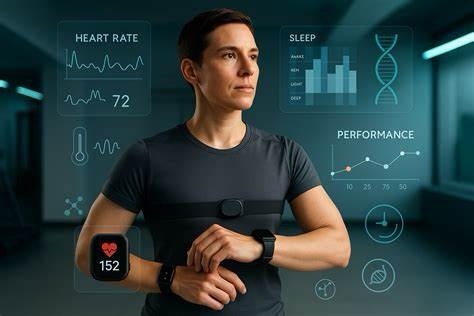
AI is increasingly becoming the engine behind modern biohacking. Machine learning algorithms analyse vast amounts of personal data—sleep patterns, heart rates, genetic profiles, cognitive performance—to generate tailored optimisation strategies. AI-driven apps recommend diets, training regimes, supplements, and even mental exercises designed to maximise individual performance. In more advanced settings, AI helps design neural interfaces, predict biological responses, and accelerate genetic research.
In essence, AI is turning the human body into a dataset—and biohackers into living experiments.
This convergence of AI and biohacking raises profound questions about the future of human experience. If technology can enhance memory, strength, focus, or longevity, who gets access to these tools? Will optimisation become a luxury reserved for the wealthy, deepening social inequality? And if algorithms begin to guide how we think, move, and feel, where does human autonomy end and machine influence begin?
There are also serious safety concerns. Electrical stimulation devices, unregulated supplements, and experimental implants can cause physical harm. Psychological risks are equally real: the obsession with constant self-optimisation can lead to anxiety, burnout, and distorted self-worth. Without scientific validation, many biohacking claims rest on anecdote rather than evidence.
Yet it would be simplistic to dismiss biohacking entirely. Historically, many scientific breakthroughs began as unconventional ideas. Early pioneers of fitness science, neuroscience, and digital health were once considered radicals. Over time, some of their ideas became mainstream medicine. The same may happen with parts of biohacking—what seems reckless today could become regulated, refined, and scientifically validated tomorrow.
We are living in what feels like a technological jungle, where innovation moves faster than understanding. New York, Manhattan, Silicon Valley—these places are laboratories not just of technology, but of identity. Biohacking is ultimately not just about muscles or microchips; it is about humanity’s desire to transcend its biological limits.
Whether this path leads to empowerment or danger remains uncertain. But one thing is clear: biohacking is not a fringe curiosity anymore. It is a signal of a deeper shift—where AI, biology, and ambition collide, redefining what it means to be human.
