The Growing Importance of AI Consultancy and Adoption for Modern Businesses
Artificial intelligence is no longer a distant technological frontier reserved for research labs and major technology companies. Today, it is rapidly becoming a core component of how businesses operate, compete, and innovate. As AI capabilities expand—from generative models to automated decision systems—organizations of all sizes are facing the same fundamental question: how can this technology be integrated effectively into everyday operations?
For many businesses, the answer increasingly lies in AI consultancy and structured adoption strategies.
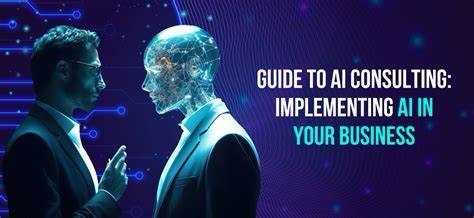
The complexity of modern AI systems means that implementation is rarely as simple as deploying a single tool. Companies must assess infrastructure requirements, data readiness, security risks, regulatory considerations, and workforce training. Without a clear strategy, businesses risk adopting AI in fragmented ways that fail to deliver meaningful returns. This is where AI consultancy has emerged as a critical service, helping organizations translate the promise of artificial intelligence into practical, measurable outcomes.
For small and medium-sized enterprises (SMEs), AI consultancy is particularly valuable. Unlike large corporations, SMEs typically lack internal AI teams or specialized technical expertise. Yet they often stand to gain the most from automation and intelligent systems. AI tools can streamline administrative processes, enhance customer engagement through intelligent chat systems, improve marketing analytics, and optimize supply chains. With proper guidance, even relatively small organizations can deploy AI in targeted ways that dramatically improve productivity and reduce operational costs.

AI consultant presenting digital transformation strategy to modern corporate leadership team
Consultants help SMEs identify the highest-impact opportunities while avoiding unnecessary complexity. Rather than investing in expensive infrastructure or experimental projects, businesses can focus on specific use cases—such as automated reporting, predictive sales analysis, or AI-assisted content production—that deliver immediate efficiency gains.
Large corporations face a different challenge. While they often possess substantial resources, their size and organizational complexity make AI adoption difficult to coordinate across departments. Many enterprises already have isolated AI initiatives scattered across teams, creating duplicated effort and inconsistent standards. AI consultancy in these environments often focuses on enterprise-wide strategy, governance frameworks, and integration across systems.

AI consultancy is crucial for businesses to unlock efficiency, innovation, and smart strategic decisions
Consultants can help corporations establish centralized AI policies, ensure responsible use of data, and align technology investments with long-term business objectives. In many cases, they also guide leadership teams through organizational transformation, helping employees adapt to workflows that increasingly involve collaboration with AI systems.
Another growing role for AI consultants is change management. The introduction of AI frequently raises concerns among employees about job security or workflow disruption. Effective adoption strategies emphasize augmentation rather than replacement, showing teams how AI can remove repetitive tasks while enabling higher-value work. Training programs and transparent communication are often just as important as the technology itself.
Looking ahead, the demand for AI consultancy is likely to expand significantly. As artificial intelligence evolves into a form of digital infrastructure—much like cloud computing before it—businesses will increasingly require expert guidance to remain competitive. The challenge will not simply be adopting AI, but adopting it strategically, responsibly, and efficiently.
For both SMEs and global enterprises, the organizations that succeed will be those that treat AI not as a novelty, but as a fundamental component of modern business strategy.
