
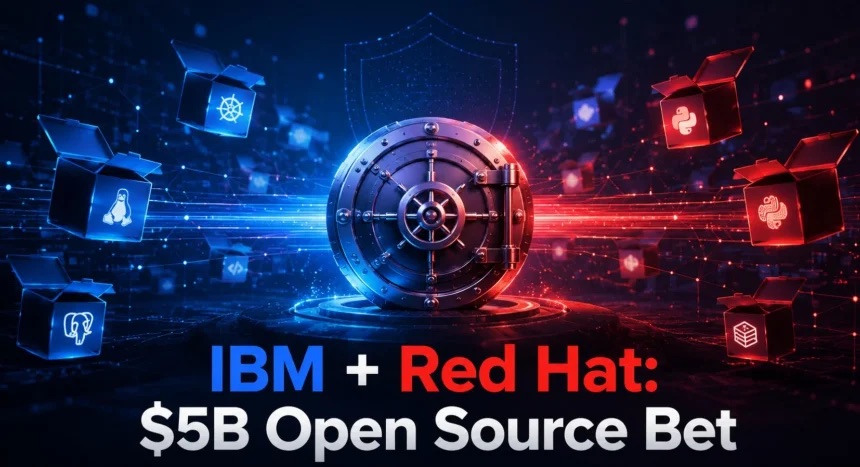
When IBM acquired Red Hat for $34 billion in 2019, it was the largest software acquisition in history. At the time, the deal was widely interpreted as a strategic move to dominate the emerging hybrid cloud market by combining IBM’s enterprise relationships with Red Hat’s leadership in open-source software. Few anticipated that the acquisition would also position IBM at the centre of one of artificial intelligence’s most pressing challenges: securing the software ecosystem upon which modern AI depends.
The launch of Lightwell Network and Lightwell Clearinghouse Premier marks the next chapter in that strategy. Rather than simply responding to today’s cyber threats, IBM and Red Hat are recognising a new reality. Artificial intelligence is accelerating the discovery of software vulnerabilities, fundamentally changing how organisations must protect critical digital infrastructure.

Open-source software powers much of the global economy. Linux, Kubernetes, Python and countless other community-developed technologies form the backbone of cloud computing, financial services, healthcare, telecommunications, manufacturing and government systems. They also underpin the majority of enterprise AI platforms deployed today.
Historically, the strength of open source has been its collaborative development model. Thousands of developers continuously improve software while identifying and fixing vulnerabilities. However, generative AI has dramatically altered the balance. Large language models can now analyse millions of lines of source code in hours rather than weeks, identifying security weaknesses at unprecedented speed. The same technology helping developers write better software is also helping cybercriminals identify new attack vectors.
This changing threat landscape explains why IBM’s investment in Red Hat is proving increasingly valuable. What began as a hybrid cloud strategy has evolved into a broader platform for trusted AI infrastructure. Lightwell extends that vision by creating commercial services that help coordinate vulnerability disclosure, accelerate remediation and strengthen collaboration between software maintainers, enterprise customers and security researchers before AI-driven attacks can be exploited at scale.
For CEOs, this represents more than another cybersecurity product announcement. It signals a shift in enterprise priorities. As organisations invest billions in artificial intelligence, boards are increasingly recognising that AI is only as trustworthy as the infrastructure supporting it. Security can no longer be treated as a technical afterthought; it has become a strategic business imperative influencing operational resilience, regulatory compliance and corporate reputation.
The wider technology industry is moving in the same direction. Microsoft continues embedding AI security across Azure. Google is strengthening software supply chain protection through its cloud platforms. NVIDIA is investing heavily in secure AI infrastructure, while Amazon Web Services is expanding AI governance capabilities. IBM’s differentiation lies in protecting the open-source foundations that enable these ecosystems to flourish.
Looking back, IBM’s acquisition of Red Hat appears increasingly prescient. The company did not simply acquire a cloud software provider—it secured a leadership position within the open-source community at precisely the moment artificial intelligence began reshaping enterprise computing. Lightwell demonstrates how that long-term investment is evolving from cloud enablement to AI resilience.
The lesson for business leaders is unmistakable. Competitive advantage in the AI era will depend not only on deploying intelligent systems but on ensuring the integrity, security and trustworthiness of the software ecosystems beneath them. IBM’s latest initiative suggests that the next phase of AI leadership may belong not only to those building the most powerful models, but to those creating the safest foundations upon which they operate.
