
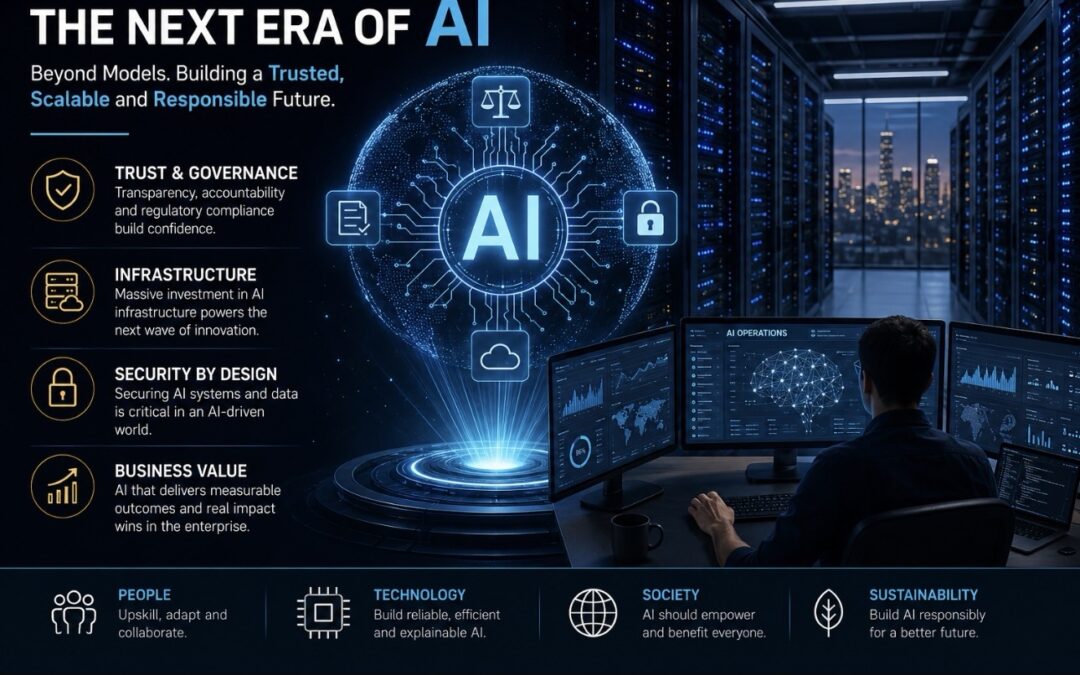
Artificial intelligence has reached an important turning point.
For the past three years, the technology industry has been captivated by a relentless stream of increasingly powerful AI models. Every few months another company announced larger context windows, faster inference speeds or improved reasoning capabilities. But during the final week of July 2026, something far more significant became clear.
The conversation is changing.
Today’s competitive advantage is no longer determined solely by who builds the most capable AI model. Instead, the winners will be those who can deploy AI responsibly, economically and at enterprise scale.
This week’s developments perfectly illustrate that shift.
The European Union’s latest AI transparency requirements signal that governance is becoming a commercial necessity rather than a regulatory inconvenience. Organisations deploying AI-generated content will increasingly need clear labelling and accountability, reinforcing that trust has become a strategic business asset rather than simply a legal obligation.
At the same time, enterprise AI investment continues to accelerate. Technology companies are investing billions in cloud infrastructure, specialist AI chips and next-generation data centres to support increasingly demanding AI workloads. These investments reflect confidence in AI’s long-term future, but they also raise important questions about return on investment, operating costs and sustainability.
For software companies, this creates a fascinating opportunity.
Customers are becoming less impressed by flashy demonstrations and more interested in measurable business outcomes. They want AI that improves productivity, strengthens cybersecurity, accelerates software development and delivers actionable insights—not simply another chatbot.
This shift is also driving rapid growth in AI security. As organisations deploy autonomous AI agents capable of performing increasingly complex tasks, ensuring those systems remain secure, transparent and compliant becomes just as important as making them intelligent. AI governance is quickly evolving from a compliance exercise into a competitive differentiator.
For technology startups, the implications are equally profound.
The next generation of successful AI companies may not necessarily build the largest language models. Instead, they will create specialised solutions that integrate seamlessly into existing business workflows while satisfying growing expectations around privacy, explainability and regulatory compliance.
Perhaps the biggest lesson from this week’s news is that the AI industry is entering a period of maturity.
Innovation remains extraordinarily fast, but businesses are asking tougher questions. How much does AI cost to operate? Can it be trusted? Is it secure? Does it generate measurable business value?
Those questions will increasingly determine which technologies succeed over the coming years.
The race to build the smartest AI is far from over. However, the race to build the most trusted, scalable and commercially sustainable AI may ultimately prove far more valuable.
As the technology industry enters this new phase, one thing is becoming increasingly clear: the future of artificial intelligence will be shaped not only by innovation, but by responsibility, transparency and real-world business impact.
