

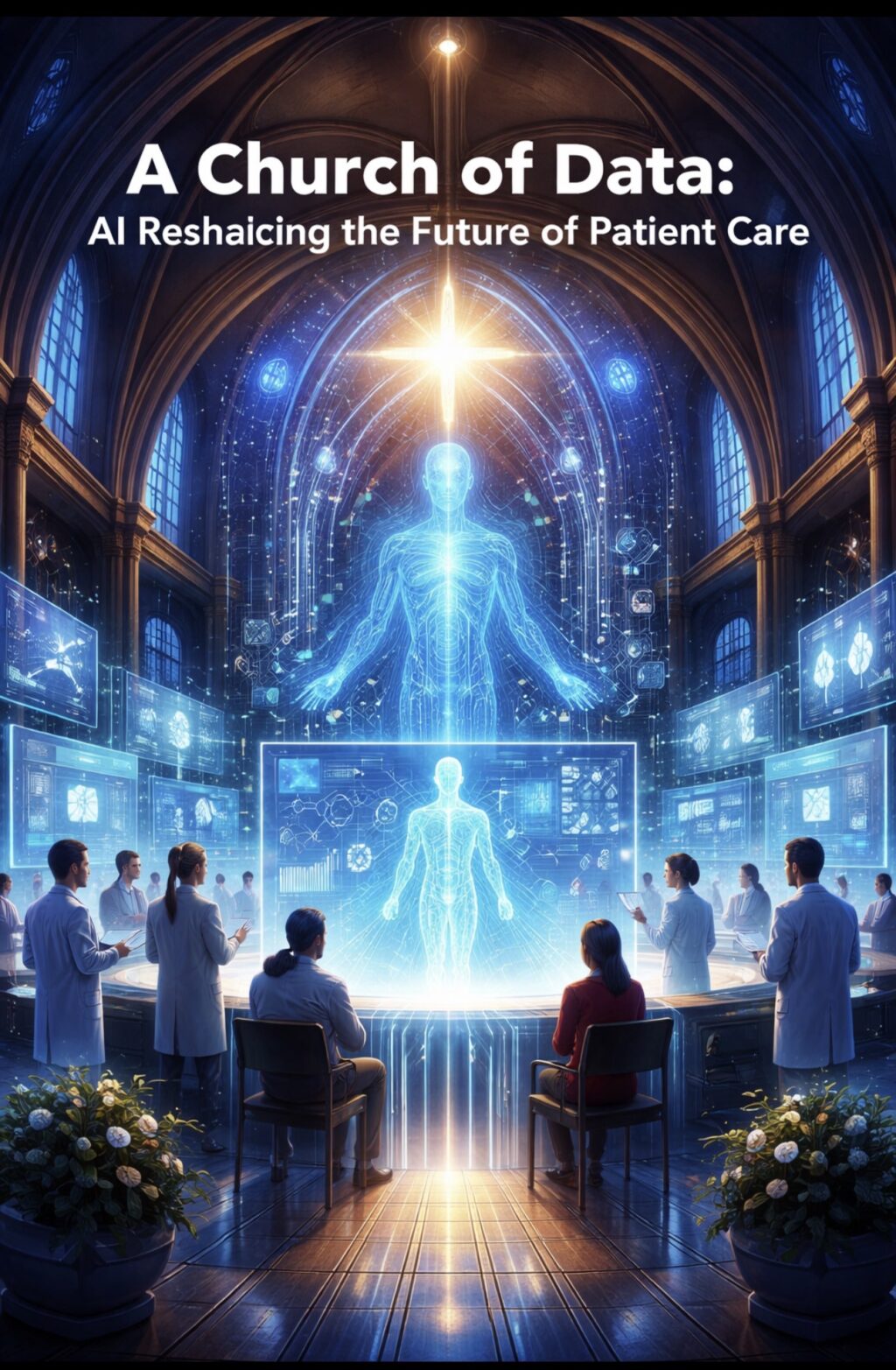
In the past, hospitals and pharmaceutical companies functioned like separate congregations—each practicing its own discipline, each interpreting patient data through its own lens. But today, a new kind of institution is emerging inside modern healthcare: a digital “church” of data, where artificial intelligence acts as both interpreter and integrator of complex medical knowledge.
One of the organizations helping build this new model is Genentech, the biotechnology pioneer and subsidiary of Roche. Increasingly, the company is using AI not just to accelerate research but to improve real-world patient outcomes across the healthcare ecosystem.

To understand the scale of this shift, it helps to think of healthcare like a cathedral. Traditionally, each department—research, diagnostics, clinical trials, and patient treatment—operated as separate chapels. Communication between them existed, but it was slow, fragmented, and often dependent on manual interpretation.
Artificial intelligence is changing that structure entirely.
Instead of isolated silos, AI platforms are beginning to unify enormous streams of biological, clinical, and operational data. Algorithms can identify patterns across millions of data points—patterns that would be impossible for human teams to detect at scale. In effect, AI acts like a central pulpit, translating complex signals into actionable insights for physicians, researchers, and healthcare administrators.
At companies like Genentech, this transformation is already underway. AI systems are helping researchers analyze massive datasets related to disease biology, clinical trials, and patient responses to treatment. These tools can surface potential biomarkers, predict how patients might respond to therapies, and streamline the development of new medicines.
But the real promise lies beyond the laboratory.
Artificial intelligence is also beginning to reshape the patient experience itself. By integrating data from clinical records, diagnostics, and treatment histories, AI models can help physicians tailor care more precisely to individual patients. Instead of relying solely on generalized treatment protocols, doctors can access insights derived from similar patient populations and predictive analytics.
This shift represents a movement toward truly personalized medicine.
In the metaphorical church of healthcare, patients are no longer passive attendees. They are participants in a data-driven ecosystem where information flows continuously between care providers, researchers, and technology platforms. The result is a feedback loop that improves both medical understanding and clinical outcomes.
The implications for the healthcare sector are enormous. Faster drug development, earlier disease detection, and more targeted therapies could dramatically improve survival rates while reducing costs associated with ineffective treatments.
Yet as with any powerful institution, governance and stewardship remain critical. AI models depend on high-quality data, careful oversight, and ethical implementation to ensure they benefit patients rather than simply optimizing operational efficiency.
If implemented responsibly, however, artificial intelligence may become one of the most transformative forces in modern medicine.
Much like a church brings together diverse individuals under a shared purpose, AI is beginning to unite the fragmented pieces of healthcare around a single mission: improving human health.
And in that sense, the future of medicine may not just be digital—it may be deeply communal.
