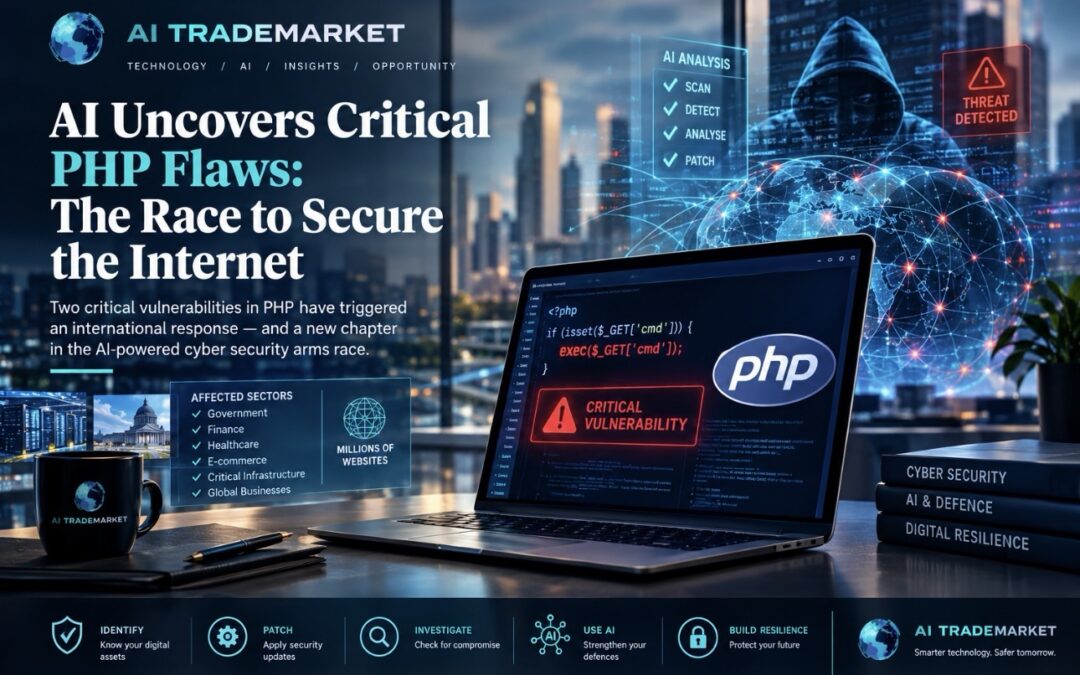
Two critical vulnerabilities in PHP have forced organisations to assess their exposure, apply emergency updates and, in some cases, take websites and services offline.
The incident is significant not only because PHP supports a large share of the internet, but because AI-assisted research helped demonstrate how one of the vulnerabilities could be exploited. The same technology that accelerated defensive analysis may also help attackers identify and target unpatched systems.
For senior executives, the central issue is operational readiness. When a critical vulnerability becomes public, the organisations best positioned to protect revenue, customer access and reputation are those that know what software they operate, who is responsible for it and how quickly they can respond.
Why This Matters to Business
On October 21, 2026, the PHP development team released security updates for two vulnerabilities that could allow unauthenticated attackers to execute malicious code on affected servers. The UK’s National Cyber Security Centre (NCSC), US cybersecurity authorities and European agencies urged organisations to identify vulnerable systems, apply the relevant updates and isolate systems that could not be secured promptly.
The potential consequences extend well beyond IT departments. A compromised website or application could expose sensitive information, disrupt transactions, damage customer confidence or provide attackers with access to wider corporate systems.
Some organisations have temporarily taken services offline while they assess their exposure. Although shutdowns can interrupt sales, public services and customer access, they may be preferable to leaving a critical vulnerability exposed.
The business calculation is clear: the cost of temporary disruption may be lower than the cost of a successful breach.
AI Has Compressed the Vulnerability Timeline
PHP is widely used to run websites and web applications. That makes vulnerabilities in the language relevant to organisations across sectors, including businesses that may not realise PHP is operating behind their websites or third-party platforms.
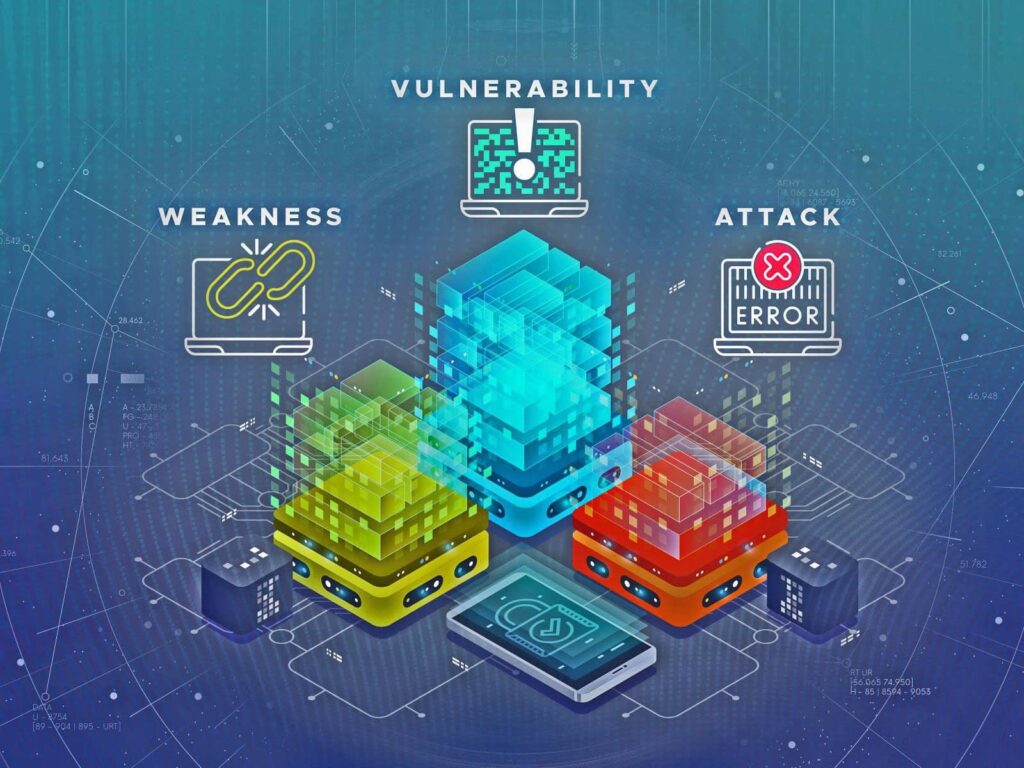
The two vulnerabilities, identified as CVE-2026-109618 and CVE-2026-109619, involve weaknesses that could allow remote attackers to execute code without authenticating first. Successful exploitation could lead to data exposure, application compromise or further intrusion.
The discovery process is particularly important for business leaders.
According to the PHP Foundation, an earlier security audit in 2024 identified signs of one of the underlying problems. Researchers understood that a weakness might exist but had not established a practical exploitation method. In 2026, AI-assisted security research helped demonstrate how the weakness could be used.
The vulnerabilities were not created by AI. However, AI helped turn a theoretical concern into a confirmed operational risk.
That distinction matters because it illustrates how the cybersecurity timetable is changing. AI can analyse complex code, test possible attack paths and help researchers validate findings more quickly. Once technical details become public, attackers may be able to use similar capabilities to identify exposed systems and develop attack methods.
The result is a shorter window between disclosure and exploitation.
The Race Is Now Between Remediation and Disruption
The vulnerabilities became public amid a disrupted coordinated disclosure process. The PHP Foundation reported that vulnerability identifiers circulated before the planned release, followed by a proof-of-concept video.
That reduced the preparation time available to organisations. Once details are public, defenders must determine whether they are exposed, apply the fix, verify the result and investigate whether attackers had already gained access.
The NCSC advised UK organisations to:
- Identify systems running PHP
- Prioritise internet-facing services
- Apply the relevant security updates
- Monitor for suspicious activity
- Isolate systems that cannot be secured immediately
For executives, this is not simply a technical checklist. Each step has a business consequence.
Identifying systems determines the potential scope of the incident. Prioritising internet-facing services protects the most exposed parts of the organisation. Applying and verifying updates reduces the likelihood of compromise. Monitoring helps establish whether an attack occurred. Isolation limits the damage when remediation cannot be completed immediately.
A vulnerable system is not necessarily a compromised system. However, applying a patch does not prove that an attacker had not already gained access. Organisations must therefore treat remediation and investigation as separate responsibilities.
AI Is Strengthening Defence and Attack
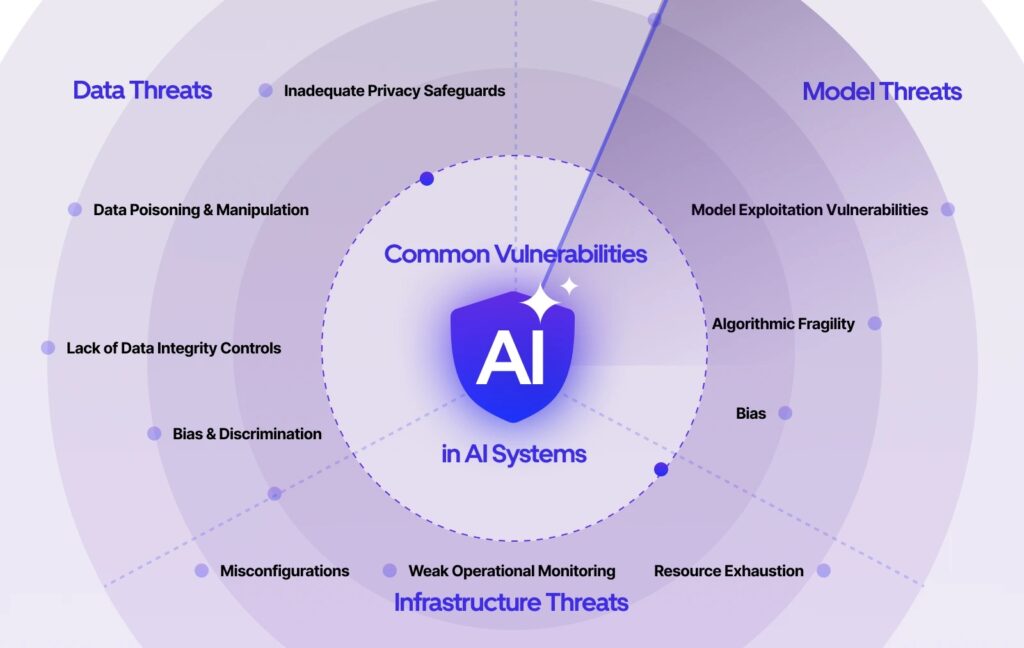
The PHP incident demonstrates the dual-use nature of AI in cybersecurity.
Defenders can use AI to analyse code, identify suspicious patterns, test vulnerabilities and develop fixes. Attackers can use comparable capabilities to investigate software, locate vulnerable targets and accelerate the development of malicious techniques.
AI has not eliminated the need for specialist expertise. Successful exploitation still depends on the target environment, the vulnerability, the attacker’s capabilities and the organisation’s security controls.
However, AI can reduce the time and effort required for important parts of the process. That is especially significant for organisations managing large estates of websites, applications, cloud services and third-party platforms.
This changes what businesses should expect from their security operations. A process designed to assess vulnerabilities over several days or weeks may no longer be adequate when a critical issue is publicly known and exploitation techniques are circulating.
The requirement is not simply to patch faster. Organisations need reliable visibility, clear ownership and tested response procedures.
AI TradeMarket: Security Requires Direct Ownership
At AI TradeMarket, we recognise that artificial intelligence, software engineering and cybersecurity are closely connected. Technology businesses must understand not only how their digital systems operate, but also how those systems are maintained and protected.
AI TradeMarket has consistently used the latest available PHP version as part of its website maintenance and security practices. Following this incident, we met with our hosting provider, reviewed the website’s backend environment and physically updated and verified the PHP version ourselves.
We have also discussed the future upgrade path with our provider, including how and when to move to subsequent releases as they become available and appropriate for our environment.
This reflects a broader operating principle: security responsibility cannot be outsourced entirely. Hosting providers, developers and technology vendors all have important roles, but business owners must still understand the systems on which their operations depend.
A website may appear to be a marketing or sales asset, but it relies on a chain of underlying technologies, including the hosting environment, PHP runtime, content-management system, plugins, themes and third-party services.
Keeping those components current is not optional maintenance. It is part of protecting business continuity and customer trust.
For website owners, the immediate priorities are to establish which PHP version is running, confirm that security updates have been applied, monitor official advisories and investigate suspicious activity where appropriate. Updating WordPress, plugins or themes does not necessarily update the server’s PHP runtime, so each layer must be checked separately.
Open-Source Infrastructure Is a Business Risk
The incident also raises a wider question: whether the resources supporting critical open-source technologies match their importance to the global economy.
PHP supports a vast ecosystem of commercial and public-sector services. Yet the teams maintaining foundational open-source projects may operate with fewer resources than the scale of their use would suggest.
When a serious vulnerability emerges, developers must investigate the cause, design and test fixes, manage compatibility risks, coordinate disclosure and support users through the update process. The PHP Foundation’s account of this incident acknowledges shortcomings in earlier security processes and outlines steps to strengthen them.
AI can help identify and validate weaknesses, but it cannot replace experienced developers, sustained funding or disciplined maintenance. In fact, faster AI-assisted discovery may increase the number of vulnerabilities requiring expert review and remediation.
This creates a shared responsibility for governments, technology companies and major users of open-source software. Investment in the security of critical infrastructure is not merely a technical or social contribution. It is a form of economic risk management.
The cost of supporting preventative security is likely to be far lower than the cost of widespread disruption, data loss or reputational damage.
What Executives Should Do Now
The PHP incident offers five practical priorities for boards and senior management.
1. Establish software visibility. Identify websites, applications and services that depend on PHP, including systems managed by suppliers or third parties. If the organisation does not know where software is running, it cannot assess its exposure.
2. Confirm, rather than assume, that updates are installed. Verify the running software version and confirm that the relevant security fixes are active. General assurances that a platform is “up to date” are not sufficient.
3. Separate patching from investigation. Applying an update reduces future exposure, but it does not determine whether compromise occurred. Review logs, account activity, unusual processes and other indicators of unauthorised access.
4. Define decision rights for urgent incidents. Establish who can approve emergency updates, service isolation, customer communications and temporary shutdowns. Delays often occur because technical teams lack clear authority to act.
5. Use AI defensively and responsibly. AI-assisted code analysis, vulnerability testing and monitoring can improve security. These tools should operate within appropriate governance, access controls and review processes.
These measures support more than technical resilience. They protect revenue, customer relationships, regulatory standing and the organisation’s ability to continue operating during a fast-moving security incident.
AI TRADEMARKET INSIGHT
The PHP vulnerabilities show how AI is changing the economics of cybersecurity. A weakness that remained difficult to exploit became a confirmed operational risk when AI-assisted research helped establish an attack pathway. That discovery enabled developers to produce fixes, but it also reduced the time available for organisations to protect themselves.
For senior leaders, the lesson is direct: cybersecurity must be managed as an ongoing business capability, not as an occasional IT exercise.
Organisations need visibility of their digital assets, clear accountability for maintenance, rapid remediation procedures and the ability to investigate potential compromise. They also need to recognise that temporary disruption may sometimes be the most responsible way to protect the wider business.
The incident reinforces the importance of investing in the foundations of the internet. Open-source software enables innovation at scale, but its security depends on sustained expertise, effective processes and adequate resources.
At AI TradeMarket, we see this as a central issue for businesses adopting artificial intelligence. The opportunity is not only to use AI to improve productivity or create new products. It is also to apply technology intelligently to strengthen the security, resilience and reliability of the infrastructure on which business depends.
In the AI era, competitive advantage will increasingly belong to organisations that can innovate quickly, identify risk early and act decisively before technical vulnerabilities become business crises.
AI TradeMarket
Tracking how artificial intelligence is changing business, industries and markets.
