
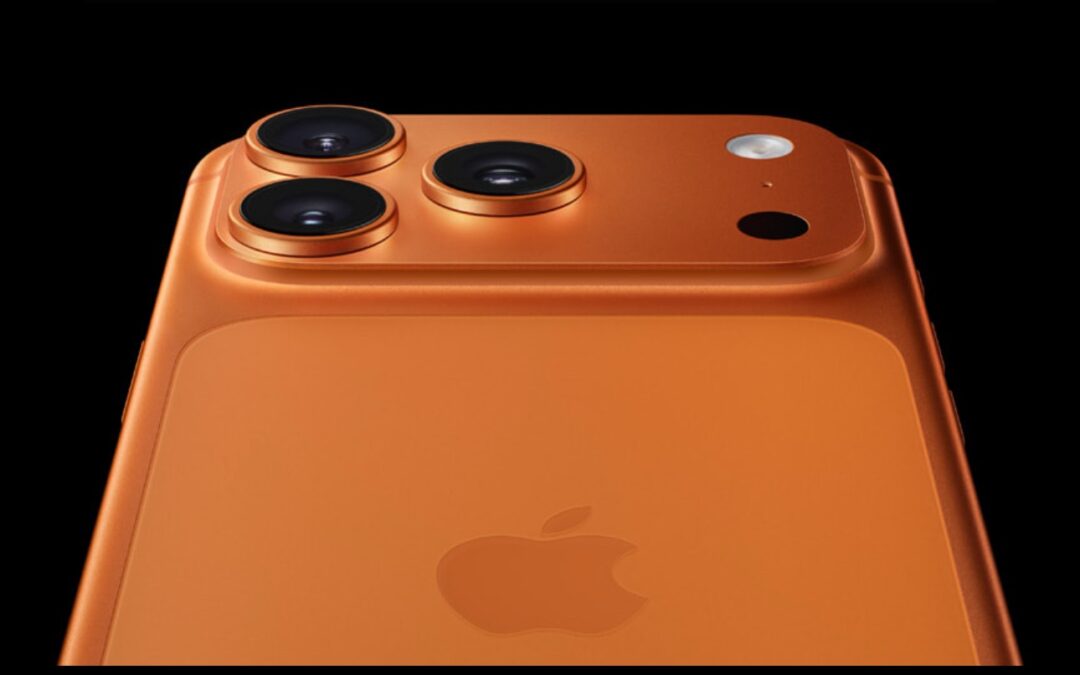
With the iPhone 17 series, Apple is making one of its most significant strategic pivots since the introduction of the Neural Engine in 2017. The company’s message is clear: artificial intelligence should be useful, private, and seamlessly integrated, not experimental or invasive. To achieve that, Apple has redesigned its hardware, software, and services to support what it now calls Apple Intelligence — a suite of on-device AI capabilities that bring contextual understanding and generative creativity directly to the user’s hands.
At the heart of this transformation lies the A19 Bionic chip, fabricated on an advanced 3-nanometer process. It delivers up to a 30 percent improvement in neural performance and introduces dedicated AI accelerators embedded within the GPU and CPU cores. These components enable the iPhone 17 Pro Max and its siblings to handle large-scale language and vision models locally, dramatically reducing latency while ensuring sensitive data never leaves the device.
One of the most visible beneficiaries of this architecture is the camera system. Apple’s computational photography pipeline, powered by the upgraded Photonic Engine, now combines multiple high-resolution sensors with intelligent scene detection. The result is sharper low-light imaging, real-time subject recognition, and adaptive focus that understands context — whether you are shooting landscapes, portraits, or motion video. Professional users will notice that the phone now approaches DSLR-level color fidelity and depth accuracy.
Meanwhile, Apple is weaving generative AI into daily iOS experiences. Features such as Image Playground allow users to create stylized images instantly; Live Translation offers bi-directional real-time language conversion; and Smart Writing Tools help craft messages or summarize content within native apps. Importantly, these features run through Apple’s Private Cloud Compute, a system designed so that even when server assistance is required, data is anonymized and encrypted end-to-end.
This privacy-first approach differentiates Apple’s AI strategy from competitors relying heavily on cloud infrastructure. It reflects the company’s philosophy that intelligence should enhance personal devices, not expose personal information.
From a technical standpoint, Apple’s AI enhancements are carefully balanced with battery management and thermal control. The A19’s efficiency cores and improved heat dispersion mean that intensive AI workloads — like image generation or translation — can run without compromising device temperature or endurance.
For developers, the new Core ML 5 framework and extended Neural Engine APIs open access to Apple’s on-device learning capabilities. This allows app creators to integrate AI functions — from image segmentation to natural-language understanding — without relying on third-party servers.
In essence, the iPhone 17 range represents a measured and methodical evolution toward intelligent computing. Rather than chasing hype, Apple is building the foundations for a future where AI is invisible, dependable, and deeply personal — a tool that empowers rather than overwhelms.
With this release, Apple hasn’t just updated a smartphone. It has quietly redefined what a smart phone truly means.

i. Apple’s Next Leap: iPhone 17 and the Age of On-Device Intelligence
ii. How the A19 Bionic Redefines AI Performance
iii. Neural Processing and the Evolution of the Apple Neural Engine
iv. From Siri to Apple Intelligence: Smarter, Context-Aware Interaction
v. Camera AI: Computational Photography at a Professional Level
vi. Generative Tools: Image Playground, Writing Assistance and Live Translation
vii. Privacy by Design: Why Apple Keeps AI Local
viii. Power Efficiency, Thermal Design, and Mobile AI Constraints
ix. Implications for Developers and the Broader iOS Ecosystem
x. A Strategic Shift: Apple’s Cautious, Consumer-Centric AI Revolution
