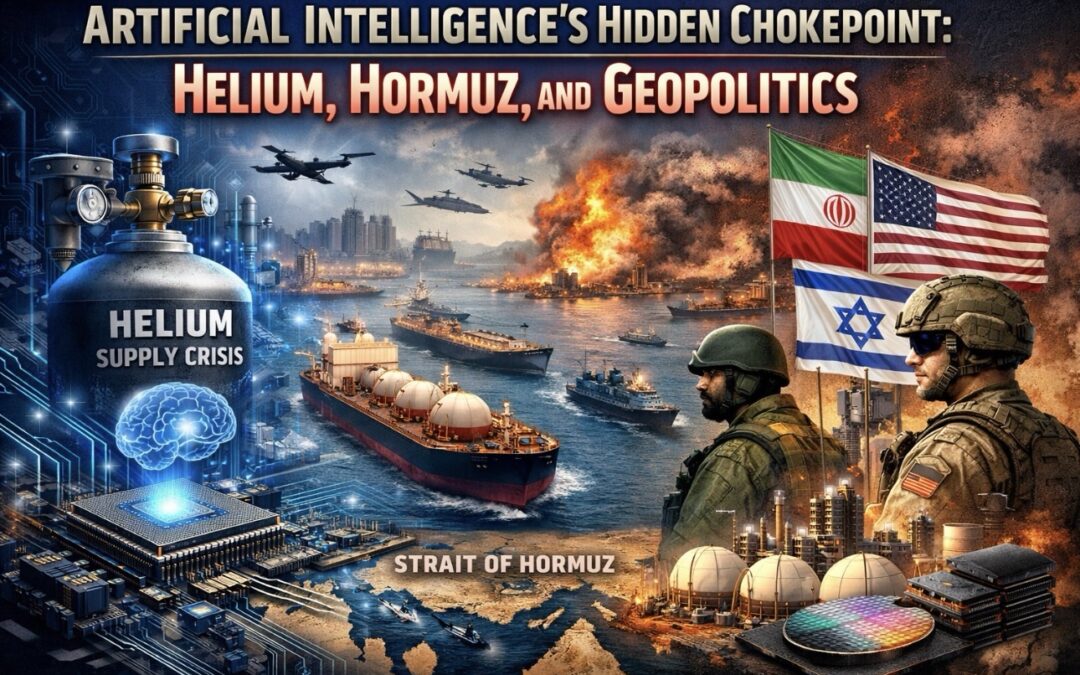
The global artificial intelligence boom—led by companies such as Nvidia, Microsoft, Amazon, and Google—is built on a fragile industrial foundation that few boardrooms fully appreciate. The escalating conflict involving the United States, Israel, and Iran has exposed one of the most overlooked vulnerabilities in the AI economy: helium supply chains moving through the Strait of Hormuz.
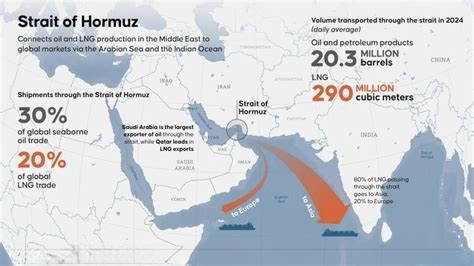
While public attention focuses primarily on oil prices, the deeper strategic risk lies in semiconductor production inputs. Helium—an inert gas with no scalable synthetic substitute—is essential for cooling and stabilizing semiconductor manufacturing equipment used in advanced chip fabrication. It is critical in the etching, purging, and lithography processes required to manufacture AI accelerators and high-performance processors.
Recent military escalation has directly damaged key facilities in Qatar’s Ras Laffan industrial complex, the largest concentration of helium production infrastructure globally. Qatar normally supplies roughly one-third of the world’s helium output, meaning the shutdown immediately removed a major portion of global supply.
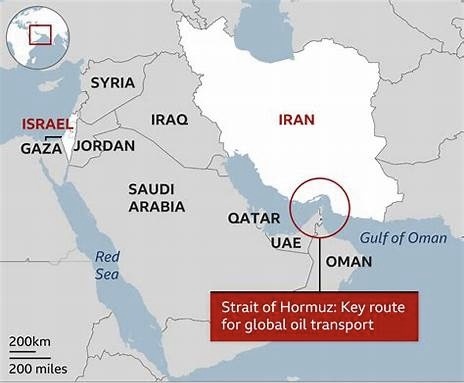
Compounding the problem, the effective blockade of the Strait of Hormuz—the only maritime export route for Qatari helium—has stranded shipments and disrupted global logistics.
This disruption comes at the worst possible moment for the technology sector. Global demand for AI computing power is accelerating dramatically as hyperscale data centers expand infrastructure to support large language models and generative AI systems. Semiconductor fabs operated by companies such as Taiwan Semiconductor Manufacturing Company, Samsung Electronics, SK Hynix, and GlobalFoundries already operate near full capacity.
Helium shortages are now forcing manufacturers to ration supply and prioritize high-margin chip production—particularly AI processors—over lower-value electronics.
The geopolitical ripple effects extend beyond supply chains. The conflict has exposed widening divisions among Western allies. Several European governments—including Germany and France—remain formally aligned with the United States yet have privately expressed concern over the economic consequences of prolonged disruption to Gulf shipping lanes. European semiconductor ecosystems depend heavily on imported industrial gases and materials, leaving their technology sectors vulnerable to extended shortages.
Meanwhile, the crisis is accelerating realignments in global energy trade. Iran has continued allowing oil shipments to major Asian buyers such as India and China, even as Western maritime traffic faces restrictions or heightened risk in the region. This selective flow of commodities reflects the emerging fragmentation of global economic blocs—a shift with direct implications for AI infrastructure investment and energy security.
For technology executives, the key lesson is that AI growth projections increasingly depend on geopolitical stability in unexpected sectors. The semiconductor supply chain is no longer just a story about silicon and fabs; it now spans shipping lanes, LNG facilities, industrial gas extraction, and military deterrence.
Consider the implications. AI data centers require enormous volumes of advanced chips produced through a complex, multi-stage manufacturing process spanning dozens of countries. Even minor disruptions to upstream materials—helium, bromine, aluminum, specialty chemicals—can cascade into delays across the entire AI ecosystem.
If the conflict persists, analysts expect three structural impacts on the AI economy:
First, semiconductor input costs will rise sharply, increasing capital expenditure for AI infrastructure.
Second, chip supply prioritization will favor hyperscale AI workloads over consumer electronics, concentrating technological advantage among the largest technology firms.
Third, governments will accelerate industrial policy aimed at reshoring critical materials and semiconductor inputs.
For CEOs and policymakers alike, the Strait of Hormuz crisis illustrates a broader strategic reality: the future of artificial intelligence is increasingly determined not just by algorithms and compute—but by geopolitics, energy infrastructure, and the security of obscure industrial gases.
In other words, the next phase of the AI revolution may hinge as much on helium tankers in the Persian Gulf as on GPUs in Silicon Valley.
