
The Convergence of Life and Logic
The next evolution in computing isn’t made of silicon — it’s alive. Bio-computing, when fused with artificial intelligence (AI), is shaping a radical new frontier: wetware computing. Unlike traditional hardware or even quantum systems, wetware uses living neurons and organic material to process information. This merging of biology and computation could redefine how machines think, adapt, and even “feel,” moving humanity closer to building living, learning technologies inspired directly by nature.
What Exactly Is Wetware Computing?
“Wetware” refers to computing systems built from biological matter — neurons, proteins, or other organic structures capable of processing information. A wetware computer is sometimes called an artificial organic brain or neurocomputer. Instead of electrons flowing through metal circuits, wetware relies on electrochemical signals — the same ones that drive our thoughts and memories.
The concept is more than theory. In the late 1990s, biological engineer William Ditto at the Georgia Institute of Technology achieved a milestone by constructing a simple neurocomputer using leech neurons that could perform basic addition. While modest in scale, his work demonstrated that living neurons could be wired together to execute computational tasks — a biological proof of concept that opened the door to today’s emerging bio-computing field.
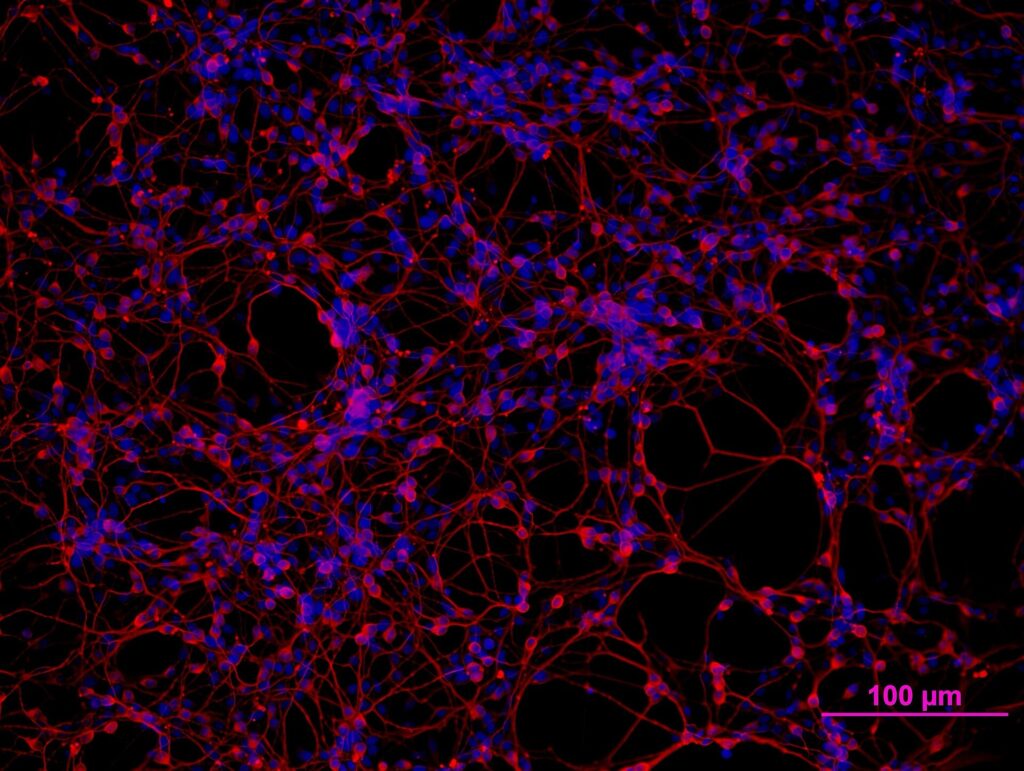
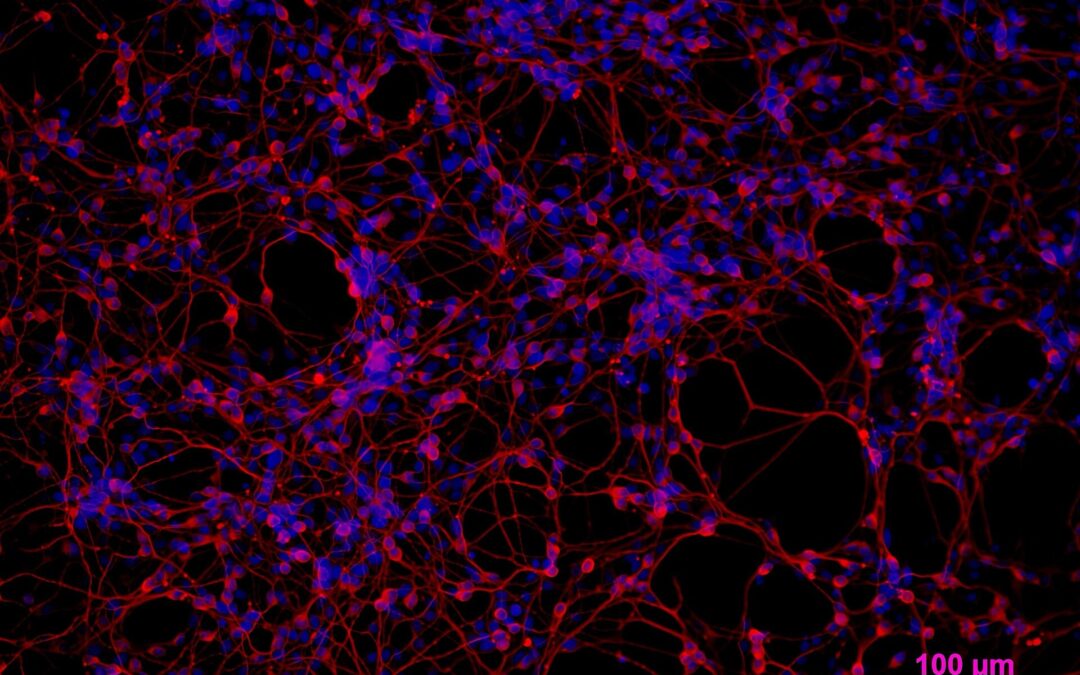
This image is of neural network cultured brain cells, highlighting connections between neurons
Why Biology May Outperform Silicon
Traditional computers, even the most powerful supercomputers, are constrained by heat, power, and miniaturization limits. Biological systems, on the other hand, are astonishingly efficient. The human brain, for instance, consumes about 20 watts — roughly the power of a dim light bulb — yet performs trillions of complex operations every second. Wetware systems aim to replicate that efficiency, enabling adaptive, self-repairing, and massively parallel computation that digital chips can’t easily achieve.
This organic approach could revolutionize AI, which currently depends on energy-intensive data centers. A future wetware AI could “learn” directly through neural growth and electrochemical adaptation rather than vast datasets and digital training cycles. In essence, instead of simulating a brain — we may begin building one.
Artificial Intelligence Meets Living Circuits
Artificial intelligence provides the algorithmic intelligence to harness the chaotic complexity of biological systems. Machine learning models can guide how neurons connect, stabilize networks, and optimize communication within organic circuits. Conversely, biological computing offers AI a substrate capable of spontaneous pattern recognition, plasticity, and creativity — hallmarks of human cognition.
This convergence could yield technologies once confined to science fiction: self-healing processors, adaptive robotics, living biosensors, or even synthetic neural interfaces that link directly to the human brain. A neuromorphic future, where “hardware” grows and learns like tissue, may be far closer than we imagine.
Current Challenges and Ethical Frontiers
Despite the excitement, wetware and bio-computing face steep challenges. Biological material is unpredictable and difficult to control; neuron growth, stability, and reproducibility remain ongoing technical hurdles. There are also profound ethical concerns. If we build systems that mimic living brains, at what point do they cross the line from tool to sentient entity? Governance, transparency, and moral oversight must advance as rapidly as the science itself.
The Prognosis for the Future
The prognosis for bio-computing and AI convergence is cautiously optimistic. Over the next two decades, hybrid models may dominate — systems blending silicon logic with biological cores to gain the best of both worlds. Researchers are already cultivating neuron-based chips, experimenting with brain–computer interfaces, and teaching AI to model living neural networks.
By 2040, the line between biology and technology could blur entirely. Wetware computers may operate alongside digital processors in labs, hospitals, and data centers, performing tasks traditional systems cannot. These living machines won’t just compute — they’ll adapt, evolve, and possibly understand.
The age of AI has already begun. But the age of living intelligence — powered by bio-computing and wetware — is what comes next.
