
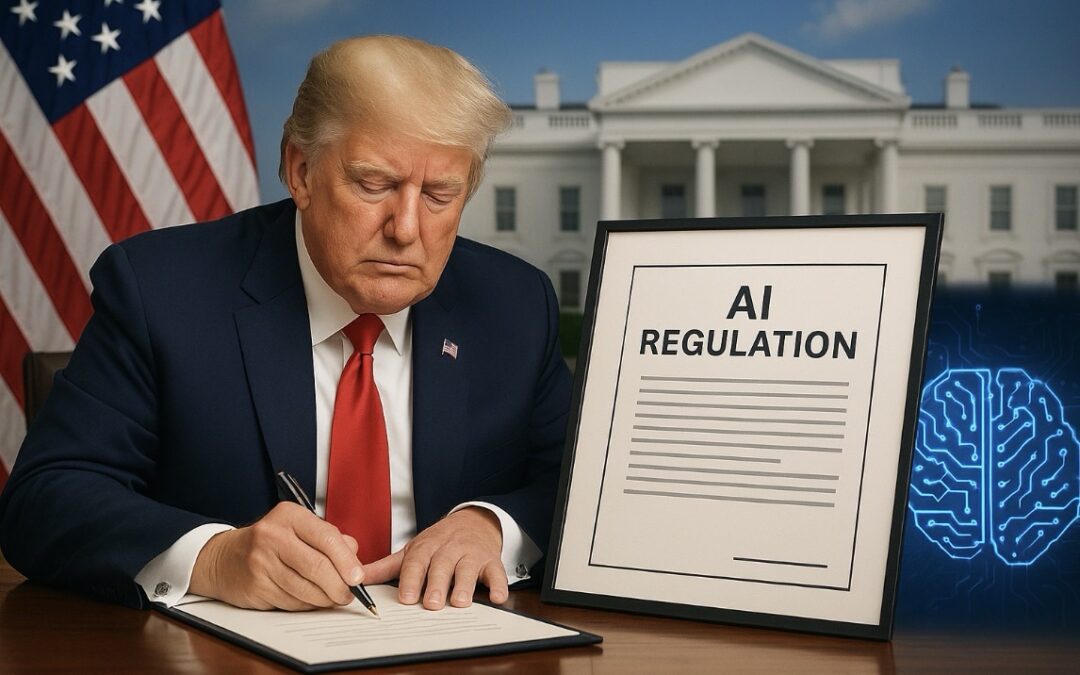
In a landmark move on December 11, 2025, President Donald Trump signed an executive order designed to sharply limit the ability of individual U.S. states to regulate artificial intelligence (AI). The administration’s justification is clear: a single, unified federal regulatory regime will prevent a patchwork of conflicting state laws from hindering AI development and America’s global competitiveness.
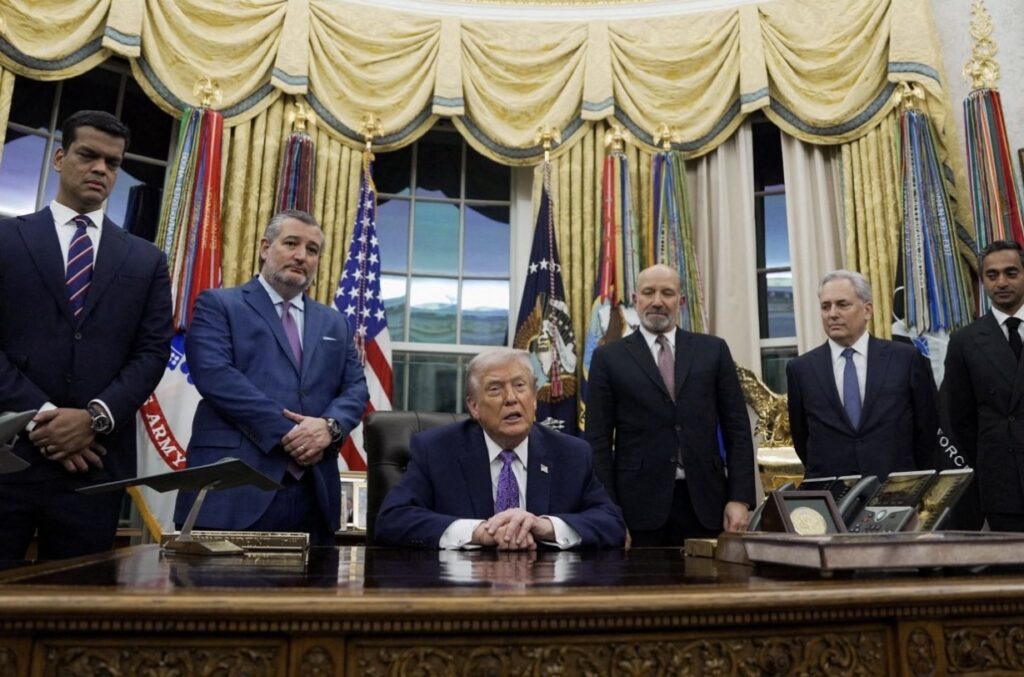
The order aims to preempt state-level AI regulations and vest most authority in federal agencies to create national standards. The White House argues that 50 different regulatory regimes would create enormous compliance burdens for developers and slow innovation—particularly at a time when the U.S. vies with China and other global competitors in AI leadership.
What This Means for Federalism and Governance
Trump’s rationale is rooted in the notion that emerging technology demands regulatory uniformity. By centralizing AI oversight, the federal government hopes to provide clarity for developers and spur investment, rather than forcing companies to navigate diverse rules from states like California, Colorado, and New York, which have already passed their own AI laws addressing transparency, safety, and bias mitigation.
However, this step has drawn sharp criticism on several fronts:
1. Constitutional and Legal Challenges
Critics argue that the president’s use of executive authority to preempt state laws raises questions about separation of powers and federalism. Some legal analysts say only Congress can legitimately strip states of regulatory authority in this domain, and that court challenges are likely.
2. Weakening Local Protections
States have been frontrunners in tackling issues that matter to residents—like AI-generated deepfakes, bias in automated decision-making systems, and transparency in advertising. Removing these protections could expose citizens to harms in contexts such as employment, housing, and public services.
3. Impact on Innovation vs. Safety
Supporters—including many major tech companies—argue a unified federal framework will reduce red tape and help the U.S. maintain its competitiveness. Opponents contend that lighter federal standards could undermine robust safeguards that progressive states have begun to establish.
Industry and Cultural Fallout
In parallel with the federal AI regulatory shift, there are other high-profile developments affecting the AI landscape. A reported $1 billion partnership between Disney and OpenAI (still unfolding) highlights how AI is influencing core creative industries. Talent groups like SAG-AFTRA have expressed concerns about AI’s impact on jobs and livelihoods, recalling the 2023 strike that focused heavily on AI and work protections in entertainment. While the specifics of that Disney–OpenAI deal remain in flux, it underscores broader anxieties about AI’s reach—and why tailored protections matter to many stakeholders.
What Comes Next
With federal authority now asserted over AI regulation, the real test lies ahead: legal pushback from states, legislative responses from Congress, and sustained public debate over how to balance innovation with rights, safety, and democratic governance. Though centralization may streamline compliance for some industries, it also intensifies long-standing tensions about the proper scope of federal power in an era of rapidly evolving technology.
