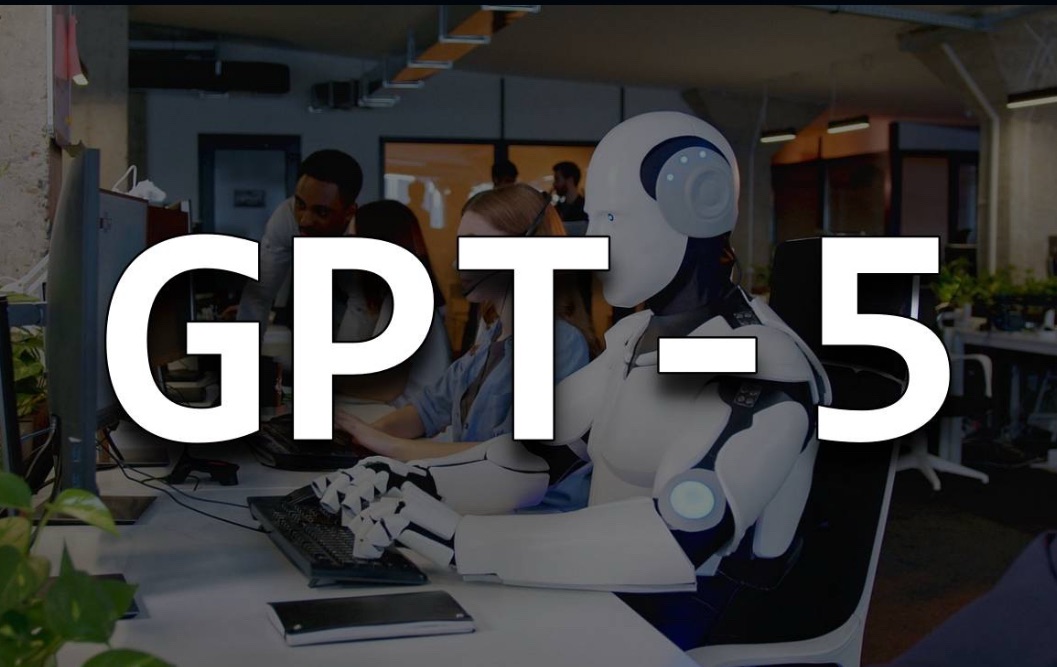
In the rapidly evolving world of artificial intelligence, OpenAI’s GPT-5, released in June 2025, stands as a milestone—perhaps the most significant since the launch of ChatGPT itself. With a core architecture based on multimodal intelligence, GPT-5 is not just an upgrade; it is a bold redefinition of what it means to interact with machines. Unlike its predecessors, GPT-5 doesn’t simply respond to text—it interprets images, listens to audio, reasons across formats, and anticipates context with a striking degree of nuance.
The most immediate difference users notice is continuity. GPT-5 doesn’t just remember what you said five prompts ago—it can, in supported environments, remember what you said yesterday, last week, or in a completely different session. While memory is still selectively rolled out, the capability itself changes the entire interaction paradigm. You’re no longer starting over each time; GPT-5 picks up where you left off. For professionals—researchers, developers, educators—this makes it less of a tool and more of a thinking partner.
Another major leap is how multimodality is treated. GPT-5 doesn’t just handle image or audio inputs; it understands the relationship between formats. It can look at a photo of a graph, interpret its trends, and explain them in plain English. It can take an audio recording of a meeting and not only transcribe it but synthesize decisions, highlight contradictions, and even suggest next steps. This isn’t just convenient—it’s the beginning of true context-aware synthesis, and it’s proving invaluable for teams working across time zones, media, and disciplines.
Equally important is reasoning. GPT-5 shows clear improvements in logic, problem-solving, and code generation. It navigates complex problems with fewer hallucinations and has a better grasp of ambiguity. Its internal model of the world has been refined with a combination of better training data, fine-tuned retrieval mechanisms, and safety-layer improvements. The result is a more trustworthy assistant—not perfect, but significantly more reliable than even GPT-4 Turbo.
The user interface experience is also evolving. GPT-5 powers many of OpenAI’s most advanced features, including custom GPTs, memory-enabled chat, and tool integrations like code interpreters, image generators, and browsing tools. For the average user, this means less switching between apps and more doing things in one seamless flow—exploring data, generating content, building prototypes, researching, and iterating—all in one place.
Still, GPT-5 isn’t without its growing pains. Questions around bias, over-reliance, copyright, and data sourcing remain critical. But instead of shying away, OpenAI is more transparent than ever, offering clearer documentation, sandboxing for developers, and collaborative red-teaming efforts with external experts. In doing so, GPT-5 marks a shift—not just toward more powerful models, but toward more accountable and participatory AI development.
Ultimately, GPT-5 feels less like an upgrade and more like a threshold—a crossing into something more adaptive, more personalized, and far more integrated into our everyday digital lives. It doesn’t replace human intelligence; it extends it, reshaping how we work, learn, create, and decide in ways that are only beginning to be understood.
