

China’s latest Spring Festival showcase was not just entertainment. It was strategic theatre.
At the 2026 edition of the Spring Festival Gala, broadcast to more than a billion viewers, humanoid robots performed synchronised kung fu, parkour and weapons routines with fluidity that would have seemed implausible just a few years ago. The message was clear: China is no longer demonstrating prototypes. It is demonstrating systems.
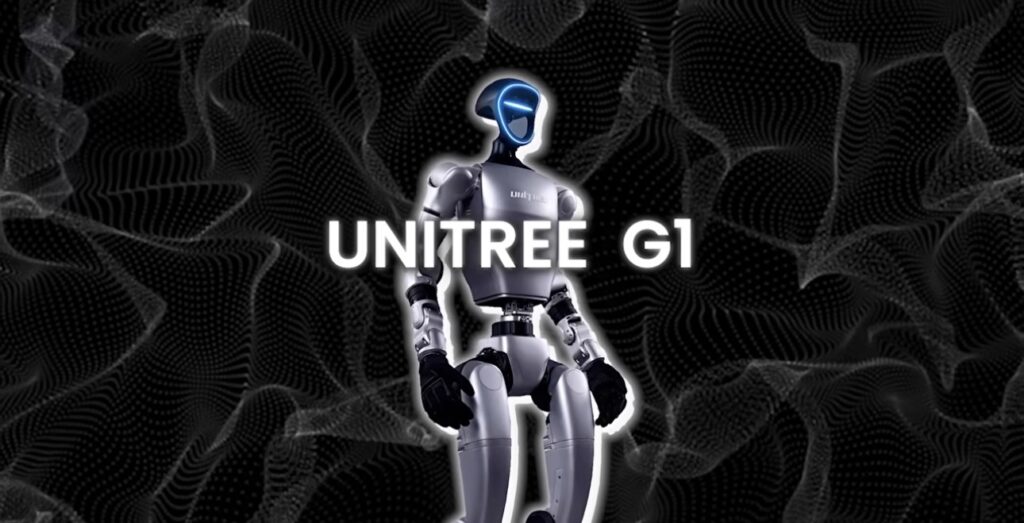
The standout performance came from Unitree Robotics whose G1 humanoid robots executed complex “drunken fist” choreography, staff spins, nunchuck sequences and coordinated flips live on stage. Importantly, these were not tele-operated machines. They ran autonomously, coordinating in real time as a swarm. One slip in front of a national audience would have been reputationally costly. None came.
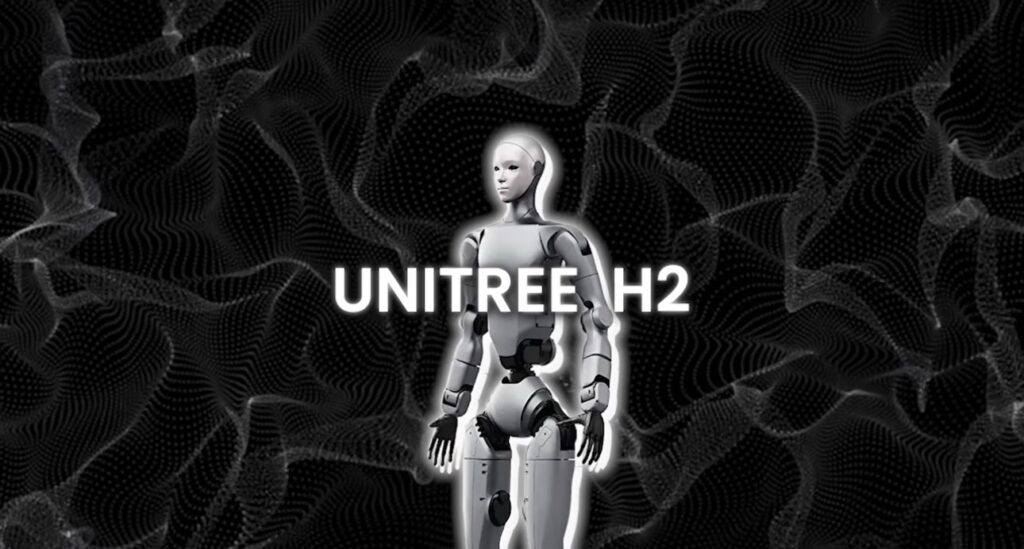
The company also unveiled its next-generation H2 humanoid, theatrically dressed as the Monkey King — a deeply symbolic character in Chinese culture — riding atop a quadruped robot styled as a mythic cloud. The symbolism matters. This was not just a robotics demo; it was a cultural assertion of technological confidence.
Meanwhile, another Chinese robotics firm, Agibot, previewed its Expedition A3 humanoid performing high-speed martial arts sequences — mid-air kicks, linked flips, rapid recoveries — with a natural cadence enabled by near-human proportions and advanced balance control. The robot’s movements were notably free of support rigs or visible stabilisation aids, underscoring progress in real-time motion planning and torque control.
While the martial arts displays captured headlines, the deeper story lies in dexterity and manipulation — the final frontier of robotics. Across the sector, companies are racing to perfect robotic hands with 20+ degrees of freedom, stronger motors and increasingly sophisticated tactile feedback. The objective is deceptively simple: pick up a fragile egg without cracking it, fold clothing neatly, then grip a tool firmly enough for industrial work.
Sanctuary AI has already deployed robotic hands with 21 degrees of freedom, while Figure AI uses its Helix system to allow robots to learn new tasks without bespoke reprogramming. Solving the “hand problem” unlocks real economic value — factories, commercial kitchens, logistics hubs and ultimately homes.
China’s commercial numbers suggest momentum is already material. In 2025, Unitree reportedly sold 5,500 humanoid units; Agibot sold 5,100; UBTech 1,000; and Leju Robotics 500. These are not laboratory quantities. They indicate early market formation.
Contrast that with the consumer-facing experiment emerging in the United States. Weave Robotics has begun selling Isaac Zero, an $8,000 stationary home robot designed solely to fold laundry. It sorts and folds a load in 30 to 90 minutes, cannot handle large sheets, struggles with inside-out garments, and occasionally relies on brief remote human intervention when confused.
Isaac Zero is impressive — but it illustrates the gap between narrow task automation and full-bodied, autonomous humanoid capability. One is a specialised appliance. The other is a platform technology.
For CEOs, three implications stand out.
First, embodied AI is accelerating faster than expected. The combination of improved actuators, real-time balance algorithms, swarm coordination and reinforcement learning is collapsing development cycles. Physical intelligence is moving from research novelty to deployable infrastructure.
Second, China is signalling technological self-reliance. By showcasing fully autonomous humanoids on its largest cultural stage, it is projecting confidence not just in hardware, but in AI software stacks, supply chains and domestic innovation capacity. The subtext: Western technology is no longer a prerequisite for leadership in embodied AI.
Third, labour economics will shift in stages. Dexterity breakthroughs will initially impact structured environments — manufacturing, warehousing, controlled service settings. But the long-term prize is general-purpose manipulation in semi-structured human environments. When robots can reliably handle soft objects, tools and unpredictable layouts, addressable markets expand dramatically.
What we are witnessing is not a gimmick cycle. It is the convergence of mobility, manipulation and machine learning at commercial scale.
The West may still lead in foundational AI research and semiconductor design. But China is demonstrating strength in system integration, rapid iteration and public deployment. In geopolitics as in business, perception shapes capital flows. A billion-viewer robotics showcase is not just national pride — it is investor signalling.
Addendum..China’s Robot Surge Signals Autonomous Power Beyond West
From dexterous robotic hands to autonomous kung fu humanoids, China’s latest robotics showcase signals industrial maturity, cultural confidence, and accelerating independence in the global AI race.
The global robotics race is no longer theoretical. It is physical, visible, embodied — and increasingly theatrical. In one sweep, we are seeing breakthroughs in dexterous manipulation, practical domestic automation, and full-scale humanoid performance systems operating autonomously before mass audiences. Together, these developments mark a turning point in applied AI.
At the foundation of this race lies the “hand problem.” Robotic manipulation has historically been the bottleneck preventing machines from performing economically valuable work. Modern systems are now reaching 20+ degrees of freedom, enabling fine-grained joint articulation, stronger micro-actuators, and advanced tactile sensing. The benchmark task is deceptively simple: pick up a fragile egg without cracking it, fold clothing precisely, then grip a tool firmly enough for industrial use. Achieve that reliably, and robots unlock real work in factories, kitchens, warehouses, and homes.
Companies such as Sanctuary AI are developing dexterous hands with 21 degrees of freedom, while Figure AI integrates its Helix system to allow robots to learn new tasks without constant reprogramming. Solving manipulation at scale is not merely a hardware milestone — it is an economic inflection point.
Meanwhile, a more focused approach is emerging in the domestic market. Weave Robotics has introduced Isaac Zero, a stationary home robot dedicated to folding laundry. Priced at $8,000 or $450 per month subscription, the machine handles one defined task: sorting and folding clean clothes within 30–90 minutes. It cannot process blankets or sheets and struggles with inverted garments. When confusion arises, remote operators briefly intervene via onboard cameras.
For CEOs evaluating automation pathways, this model is instructive. Isaac Zero demonstrates that narrow, single-purpose robots can enter consumer markets before general-purpose humanoids mature. However, it also highlights current limitations: time inefficiency, partial autonomy, and human fallback systems. The home robotics economy is emerging, but it remains assisted intelligence rather than fully independent AI.
Contrast that with what unfolded at China’s 2026 Spring Festival Gala. Unitree Robotics presented dozens of its G1 humanoid robots performing synchronized kung fu and parkour before an audience exceeding one billion viewers. This was not a controlled lab demo. It was a live, nationally broadcast performance requiring real-time balance control, motion planning, and swarm coordination.
The G1 robots executed Drunken Fist routines — staggered footwork followed by explosive bursts of force — alongside nunchuck sequences and fluid acrobatics. Importantly, the system was fully autonomous. There were no backstage joystick operators. The choreography depended on onboard AI systems coordinating movement, timing, and stabilization across the entire robot group. One visible failure would have been a national embarrassment. None occurred.
Then came Unitree’s next-generation H2 humanoid. Standing approximately human height, it appeared dressed as the Monkey King — one of China’s most iconic mythological figures — riding atop one of Unitree’s quadruped robots styled as the legendary cloud mount. The symbolism was unmistakable: technological prowess fused with cultural identity. Robotics was not presented as imitation of the West. It was framed as sovereign capability rooted in national narrative.
Simultaneously, Agibot showcased its Expedition A3 humanoid performing mid-air side kicks, flips, and half-second transitions without visible support frames. The fluidity challenged entrenched assumptions about robotic stiffness. These are machines operating with speed, rhythm, and human-scale proportions — roughly 5’9” — making the movements psychologically relatable as well as technically impressive.
From a strategic standpoint, three signals stand out:
Hardware Maturity: China’s humanoid platforms demonstrate stability, balance, and full-body coordination at scale. Autonomous Systems Integration: AI coordination across multiple units without teleoperation reflects genuine systems engineering depth. Cultural Signaling: Public demonstrations at massive national events convey confidence and technological independence.
For Western executives, this is not about spectacle. It is about supply chains, talent concentration, actuator manufacturing, and AI-hardware co-design ecosystems. The West still leads in foundational AI research and semiconductor design, but embodied AI at manufacturing scale is becoming multipolar.
The robotics race is no longer about isolated prototypes. It is about deployment, iteration, and narrative control. China’s recent displays illustrate that it is not waiting for Western technology validation. It is building, performing, and selling.
The implications are clear: the AI race is entering its embodied phase. Whoever masters dexterous manipulation, autonomous coordination, and cost-efficient production will define the next industrial era.
The AI race is no longer confined to data centres. It is stepping onto the stage, quite literally, with balance, rhythm and intent.
