The Rise of Vibe Coding
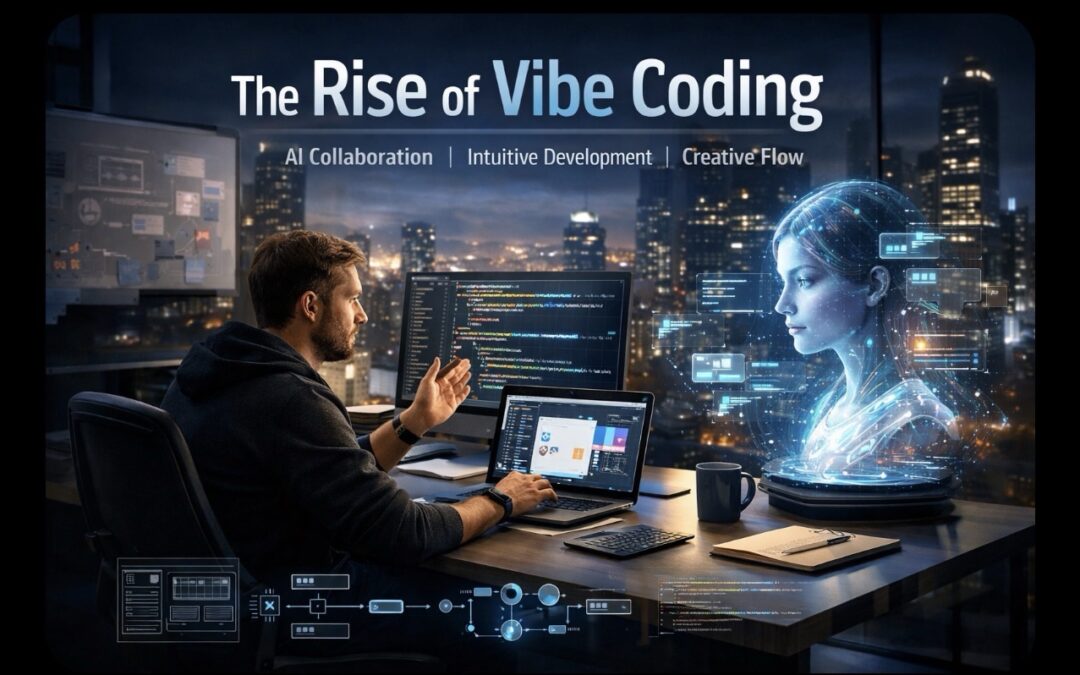
For decades, programming was defined by precision, structure, and discipline. Developers wrote code line by line, carefully translating logic into syntax. Today, something radically different is emerging: “vibe coding.” This new approach blends intuition, creativity, and AI collaboration, transforming coding from a purely technical task into an expressive, almost artistic process.
Vibe coding describes a workflow where developers focus less on rigid planning and more on momentum, experimentation, and “feel.” Instead of designing every detail upfront, they interact with AI tools, rapidly prototype ideas, and refine them based on instinct and feedback. The goal is not perfection from the start, but flow—staying in a creative state where ideas become working software at unprecedented speed.
The rise of AI coding assistants has been the primary catalyst. Tools like large language models, code copilots, and low-code platforms can generate functional code in seconds. This shifts the developer’s role from manual execution to orchestration and direction. Rather than asking, “How do I write this algorithm?” developers increasingly ask, “What should this product feel like?” The answer then guides iterative prompts and experiments.
Culturally, vibe coding reflects a broader shift in how people approach work. The traditional engineering mindset valued optimization, predictability, and control. Vibe coding embraces ambiguity, exploration, and creative risk. It mirrors trends in design, music, and entrepreneurship, where rapid experimentation often outperforms meticulous planning. In this sense, coding is becoming less like engineering and more like storytelling.
Startups and solo creators are adopting vibe coding fastest. With AI doing much of the heavy lifting, individuals can build products that once required entire teams. A single developer can prototype an app in hours, test it with users, and pivot instantly. This speed changes the economics of innovation: ideas matter more than infrastructure, and intuition becomes a competitive advantage.
However, vibe coding is not without controversy. Critics argue that it encourages shallow understanding and technical debt. When developers rely too heavily on AI-generated code, they may lose deep knowledge of systems and architecture. There is also the risk of fragile software—applications that work but are poorly structured or difficult to maintain. In complex domains like finance, healthcare, or infrastructure, traditional engineering discipline remains essential.
The most compelling future is not a choice between rigor and vibe, but a synthesis of both. The best developers will combine structured thinking with creative flow. They will understand systems deeply while leveraging AI to accelerate experimentation. In this hybrid model, vibe coding becomes a layer on top of engineering, not a replacement for it.
Ultimately, vibe coding represents a shift in identity. Developers are no longer just coders; they are designers of experiences, collaborators with machines, and curators of ideas. As AI continues to evolve, the boundary between thinking and building will blur even further. Software will be shaped not only by logic, but by intuition, taste, and vision.
In that sense, vibe coding is more than a trend. It is a glimpse of how humans and machines will create together in the future—less mechanical, more expressive, and profoundly faster than anything we have known before.
