

China’s latest Spring Festival showcase was not just entertainment. It was strategic theatre.
At the 2026 edition of the Spring Festival Gala, broadcast to more than a billion viewers, humanoid robots performed synchronised kung fu, parkour and weapons routines with fluidity that would have seemed implausible just a few years ago. The message was clear: China is no longer demonstrating prototypes. It is demonstrating systems.
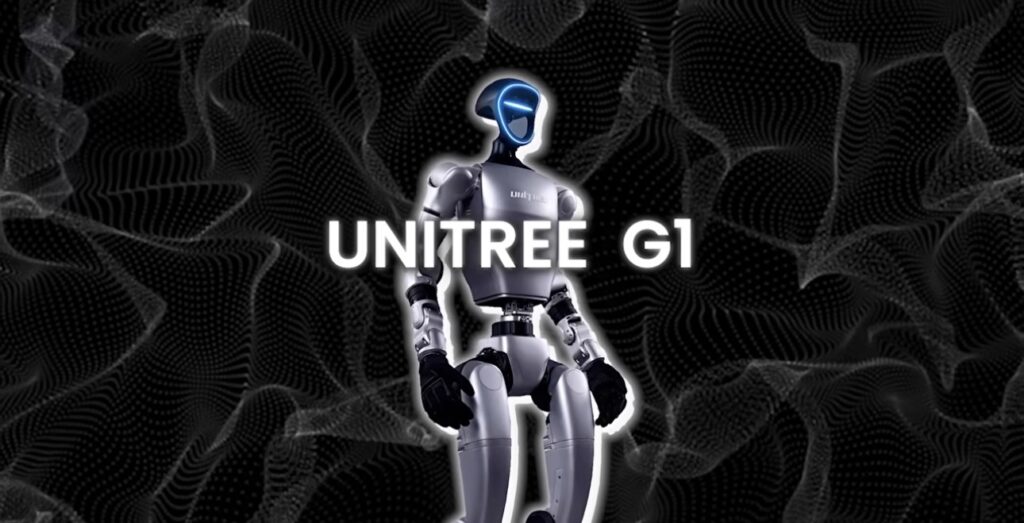
The standout performance came from Unitree Robotics, whose G1 humanoid robots executed complex “drunken fist” choreography, staff spins, nunchuck sequences and coordinated flips live on stage. Importantly, these were not tele-operated machines. They ran autonomously, coordinating in real time as a swarm. One slip in front of a national audience would have been reputationally costly. None came.
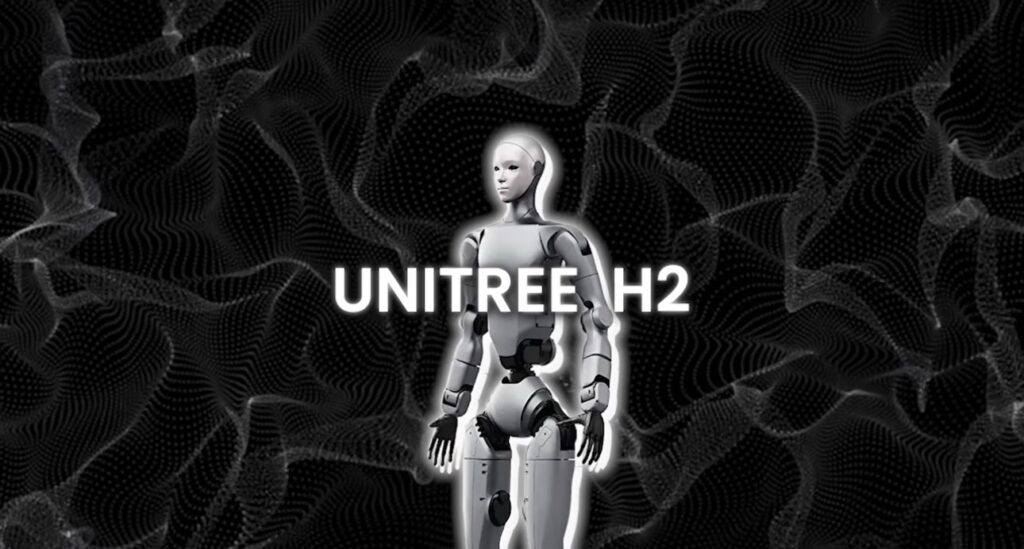
The company also unveiled its next-generation H2 humanoid, theatrically dressed as the Monkey King — a deeply symbolic character in Chinese culture — riding atop a quadruped robot styled as a mythic cloud. The symbolism matters. This was not just a robotics demo; it was a cultural assertion of technological confidence.
Meanwhile, another Chinese robotics firm, Agibot, previewed its Expedition A3 humanoid performing high-speed martial arts sequences — mid-air kicks, linked flips, rapid recoveries — with a natural cadence enabled by near-human proportions and advanced balance control. The robot’s movements were notably free of support rigs or visible stabilisation aids, underscoring progress in real-time motion planning and torque control.
While the martial arts displays captured headlines, the deeper story lies in dexterity and manipulation — the final frontier of robotics. Across the sector, companies are racing to perfect robotic hands with 20+ degrees of freedom, stronger motors and increasingly sophisticated tactile feedback. The objective is deceptively simple: pick up a fragile egg without cracking it, fold clothing neatly, then grip a tool firmly enough for industrial work.
Sanctuary AI has already deployed robotic hands with 21 degrees of freedom, while Figure AI uses its Helix system to allow robots to learn new tasks without bespoke reprogramming. Solving the “hand problem” unlocks real economic value — factories, commercial kitchens, logistics hubs and ultimately homes.
China’s commercial numbers suggest momentum is already material. In 2025, Unitree reportedly sold 5,500 humanoid units; Agibot sold 5,100; UBTech 1,000; and Leju Robotics 500. These are not laboratory quantities. They indicate early market formation.
Contrast that with the consumer-facing experiment emerging in the United States. Weave Robotics has begun selling Isaac Zero, an $8,000 stationary home robot designed solely to fold laundry. It sorts and folds a load in 30 to 90 minutes, cannot handle large sheets, struggles with inside-out garments, and occasionally relies on brief remote human intervention when confused.
Isaac Zero is impressive — but it illustrates the gap between narrow task automation and full-bodied, autonomous humanoid capability. One is a specialised appliance. The other is a platform technology.
For CEOs, three implications stand out.
First, embodied AI is accelerating faster than expected. The combination of improved actuators, real-time balance algorithms, swarm coordination and reinforcement learning is collapsing development cycles. Physical intelligence is moving from research novelty to deployable infrastructure.
Second, China is signalling technological self-reliance. By showcasing fully autonomous humanoids on its largest cultural stage, it is projecting confidence not just in hardware, but in AI software stacks, supply chains and domestic innovation capacity. The subtext: Western technology is no longer a prerequisite for leadership in embodied AI.
Third, labour economics will shift in stages. Dexterity breakthroughs will initially impact structured environments — manufacturing, warehousing, controlled service settings. But the long-term prize is general-purpose manipulation in semi-structured human environments. When robots can reliably handle soft objects, tools and unpredictable layouts, addressable markets expand dramatically.
What we are witnessing is not a gimmick cycle. It is the convergence of mobility, manipulation and machine learning at commercial scale.
The West may still lead in foundational AI research and semiconductor design. But China is demonstrating strength in system integration, rapid iteration and public deployment. In geopolitics as in business, perception shapes capital flows. A billion-viewer robotics showcase is not just national pride — it is investor signalling.
The AI race is no longer confined to data centres. It is stepping onto the stage, quite literally, with balance, rhythm and intent.
